
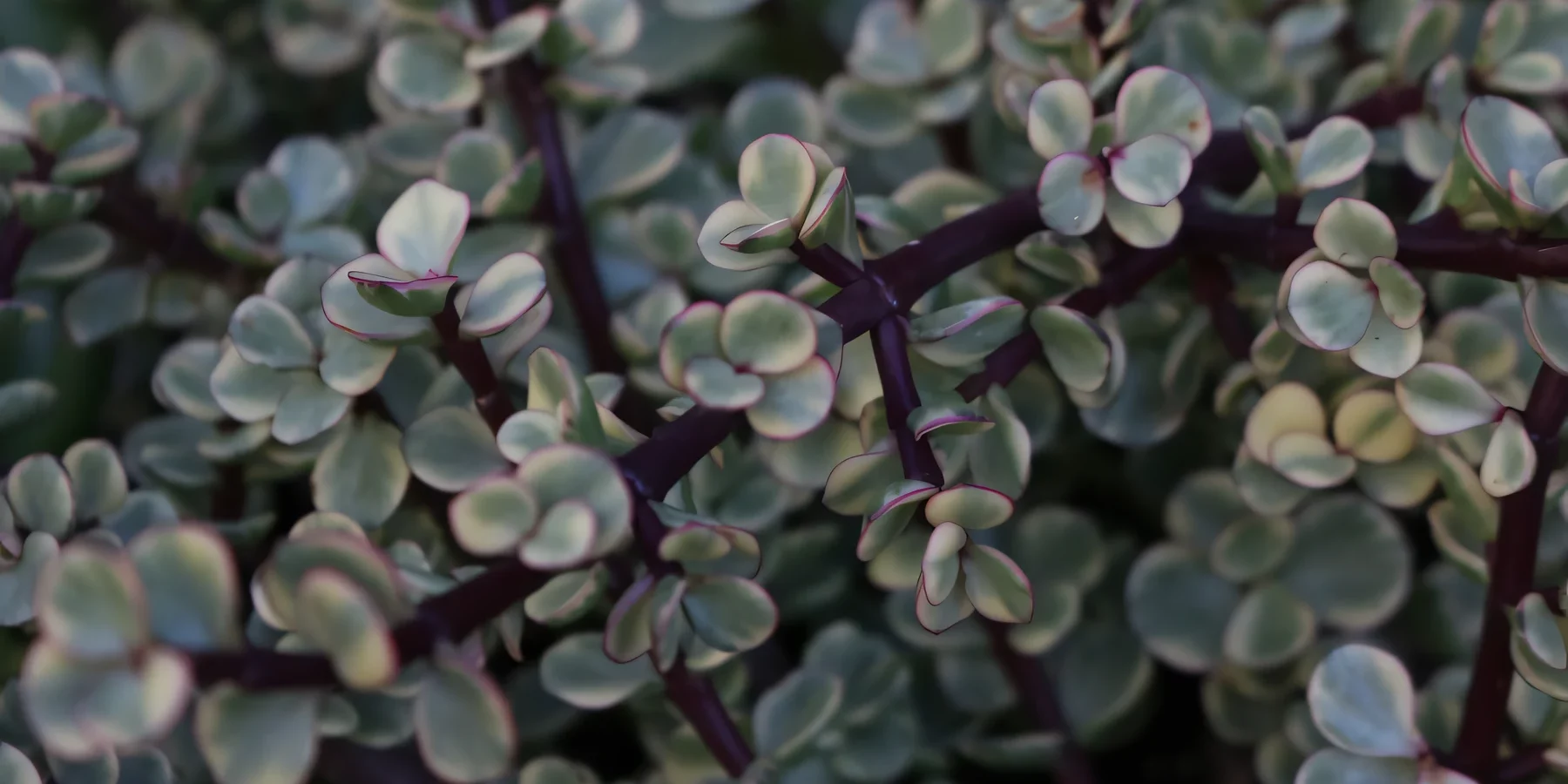
A succulent can pull carbon from the air, survive drought and frost, and still end up on a plate. Spekboom does all three, so this modest-looking indigenous plant gets talked about with unusual enthusiasm.
Call it Pork Bush or Elephant’s Food if you like. Its strongest home is in the Eastern Cape, especially the Karoo’s dry interior, where north-facing slopes, thin soils, fierce sun, and sudden cold are part of daily life. Spekboom belongs there. It tolerates the conditions because it is built for them.
Where spekboom earns its reputation
Spekboom is one of those plants that looks soft until you notice how hard it works. The leaves are fleshy and moisture-rich. The stems are sturdy enough to form real thicket. In the right conditions, it creates dense stands that store carbon, shelter other species, and hold together ground that would otherwise be vulnerable to erosion.
Its range is not random. The plant is especially associated with the semi-arid Karoo, where it finds enough sun to keep growing and enough resilience to keep going when rain is scarce. Poor soil, frost, and drought do not faze it.
A plant with unusual staying power
Spekboom is long-lived, with some plants reaching 200 years. It can also grow to about 5 metres, which is far more substantial than people expect from a succulent. When pieces break off, they root readily and start again. That habit explains how thickets spread and why degraded land can be coaxed back towards life once the plant is reintroduced.
Before large-scale livestock farming changed the landscape, parts of the Eastern Cape were said to carry spekboom growth so thick that a grown person could walk across the top like a carpet. That image sounds exaggerated until you remember how aggressively this plant fills space when conditions suit it.
Why climate people care about it
Spekboom gets labelled an environmental miracle. In optimal conditions, one hectare of healthy thicket can hold onto roughly 4 tonnes to 10 tonnes of carbon a year. On a hectare-for-hectare comparison, dense spekboom thicket can stand beside the Amazon rainforest when the conversation is carbon dioxide removal.
That does not mean every patch of spekboom is identical or that planting it is a substitute for emissions cuts. It means the plant has real value in restoration, especially in places where the ground has been stripped bare and needs something tough enough to start the recovery.
How it handles water so well
Spekboom uses a clever survival trick. In cooler, wetter months it behaves like a more ordinary plant and opens its stomata in daylight to absorb carbon dioxide. When the air dries out, it changes timing and opens those same pores at night instead, reducing water loss during the heat of the day.
That shift is why it can keep growing where other plants give up. It makes sense in landscapes where water is a constraint rather than a guarantee.
Why the leaves interest wellness shoppers
Spekboom is edible, and the leaves carry very high nutritional value. Elephants, black rhinos, and kudus eat it. People can too. The taste is mildly lemony, the texture is juicy, and the bite is full of moisture, which makes the plant feel almost like a natural refreshment when you are far from water and heat is hanging over the ground.
That practical quality is part of the appeal. On a long hike in the Karoo, spekboom is the sort of plant that reads as food and hydration at the same time. In a kitchen, it tends to work as an accent rather than a main event.
How chefs use it
Cape Town restaurants such as the Pot Luck Club have used spekboom to lift a dish with a sharp green note. It is not a heavy-flavoured ingredient, and that is why it works. The plant brings brightness, moisture, and a distinctly local story without taking over the plate.
For a wellness-minded reader, spekboom is interesting in two ways. First, it is an edible botanical with real nutritional substance. Second, it fits the current appetite for ingredients that are both functional and rooted in place, not pulled from a generic global trend cycle.
What restoration looks like on the ground
Samara Private Game Reserve in the Great Karoo uses spekboom as part of a serious landscape repair effort. The reserve is made up of 11 old livestock farms inside a Global Biodiversity Hotspot. One of its vegetation types is sub-tropical thicket, the kind of habitat that would once have supported dense spekboom growth 200 years ago. Goats and sheep changed that picture, leaving much of the area as bare red earth with scattered pockets of the plant.
Samara’s answer has been to plant spekboom back into overgrazed ground. The roots help bind the soil, cut erosion, improve soil quality, and create better conditions for grasses and other plants to return. That, in turn, supports forage for wildlife and adds another layer of carbon storage to the landscape.
The first planting round happened in May 2010 with learners from Spandau Secondary School in Graaff-Reinet. Since then, Samara has developed its conservation model with researchers from the University of Stellenbosch and other conservation scientists, aiming for better plant survival over time. Volunteers, staff, and guests also join in to help offset their carbon debts.
If spekboom planting scales properly, it could support both carbon sequestration and job creation in the province.
Samara Private Game Reserve keeps that conservation story wrapped in a luxury 5-star wilderness experience, and it shares the message on Facebook, Twitter, and Instagram. The pitch is simple enough: a safari for the soul, with a plant that does far more than fill space in the veld.